
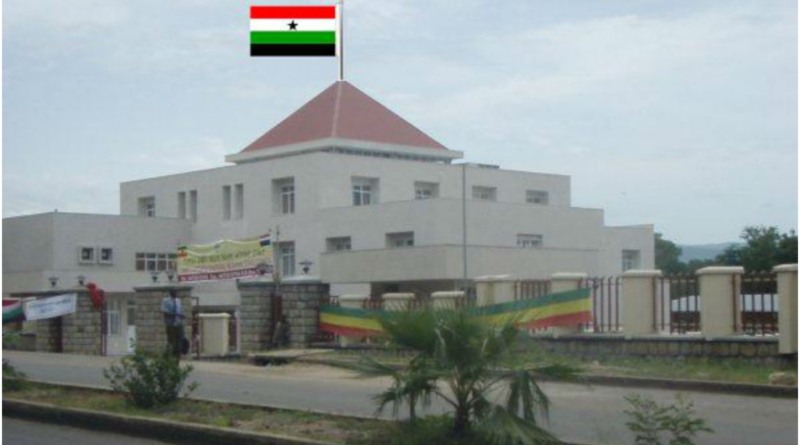
How Lare, Makuey, and Wentawo Woredas Were Created to Weaken the Indigenous Anywaa Politically.
The administrative restructuring of the Gambela Region during the TPLF/EPRDF era constitutes one of the most significant political interventions in the region’s contemporary history. Although officially framed as a decentralization effort meant to strengthen local governance, the creation of Lare, Makuey, and Wentawo woredas functioned in practice as a strategic political maneuver. This restructuring altered historical boundaries, redefined demographic realities, and ultimately diminished the political standing of the Indigenous Anywaa people within their ancestral homeland. Scholarly studies on Gambela consistently highlight how state-led territorial reorganization became a mechanism of political engineering rather than neutral administrative reform (Dereje, 2011; Feyissa, 2013).
Historically, the lands incorporated into these new woredas were part of established Anywaa territories. Research documents the deep-rooted presence of the Anywaa along the Baro, Alwero, and Gilo river systems, where they developed fishing, cultivation, and forest-based livelihoods over centuries (Feyissa, 2006; Dereje, 2011). These settlement patterns shaped regional identity long before the formation of the Ethiopian state. However, from the late 1980s onward, waves of conflict-driven migration from South Sudan brought large numbers of Nuer refugees into the region. These populations, initially received as temporary humanitarian cases, became central to the federal government’s long-term political calculations (Johnson, 2016; Young, 1999).
During the 1990s, the TPLF/EPRDF government began recognizing newly established Nuer settlements as permanent administrative units. Refugee encampments and temporary settlements were upgraded into kebeles, and subsequently consolidated into the woredas of Lare, Makuey, and Wentawo. These new woredas, aligned with Nuer-majority populations, were granted full political representation in the Gambela Regional Council. This redrawing of boundaries increased Nuer administrative units, thereby expanding their seats within regional institutions. Scholars argue that such measures served to elevate communities perceived as politically aligned with the ruling party while suppressing the influence of Indigenous groups who were more resistant to central control (Dereje, 2011; Young, 2007).
The reclassification of Anywaa ancestral territories into Nuer administrative zones carried profound political and cultural implications. Traditional Anywaa villages, riverbank settlements, fishing areas, and forest lands were reassigned despite lacking historical precedent as Nuer territories. The literature emphasizes that these shifts did not emerge organically from interethnic negotiation but rather through top-down decisions by the federal state, supported by demographic trends that were themselves products of displacement and humanitarian crisis (Feyissa, 2013). As a result, demography transformed into a political instrument: temporarily displaced populations became a permanent voting bloc whose administrative units reshaped regional governance.
The long-term effects of this restructuring remain deeply felt in Gambela. The Anywaa lost significant control over their ancestral lands, and administrative boundaries no longer reflect Indigenous settlement patterns or cultural landscapes. These changes have contributed to recurrent disputes over land, political representation, and resource allocation. Development budgets increasingly favor the newly created woredas, reinforcing structural inequalities (Dereje, 2011). Electoral outcomes have pivoted toward Nuer-led political formations, further consolidating the demographic and political dominance engineered during the TPLF/EPRDF period. Scholars describe this dynamic as a form of “internal frontier-making,” in which state power reshapes local identities and territorial claims to reinforce its own authority (Feyissa, 2013).
Ultimately, the creation of Lare, Makuey, and Wentawo did more than reorganize administrative boundaries; it redefined political power in Gambela. Through strategic use of demographic change and territorial restructuring, the ruling party transformed a refugee-influenced population into a political majority while reducing the Indigenous Anywaa to a marginalized minority. This case reflects a broader pattern in Ethiopian federal politics, where decentralization has often masked deeper strategies of political control rather than promoting genuine local autonomy.
References.
Dereje, F. (2011). The cultural construction of state borders: The view from Gambella. Journal of Eastern African Studies, 5(2), 313–330.
Feyissa, D. (2006). Othering the Nuer: The Anywaa–Nuer relations in Gambella, Ethiopia. Africa, 76(2), 180–198.
Feyissa, D. (2013). Land and the politics of belonging in Africa: A historical perspective from Gambella. African Affairs, 112(449), 289–310.
Johnson, D. H. (2016). South Sudan: A new history for a new nation. Ohio University Press.
Young, J. (1999). Along Ethiopia’s western frontier: Gambella and Benishangul in transition. The Journal of Modern African Studies, 37(2), 321–346.
Young, J. (2007). The politics of peace in Sudan: International actors and domestic processes. Routledge.