
Response to the article “The Anywaa Biosphere Reserve: Land Appropriation in the Shadow of Silence” by Pam Chuol Joack
https://www.gambellavision.net/the-anywaa-biosphere…
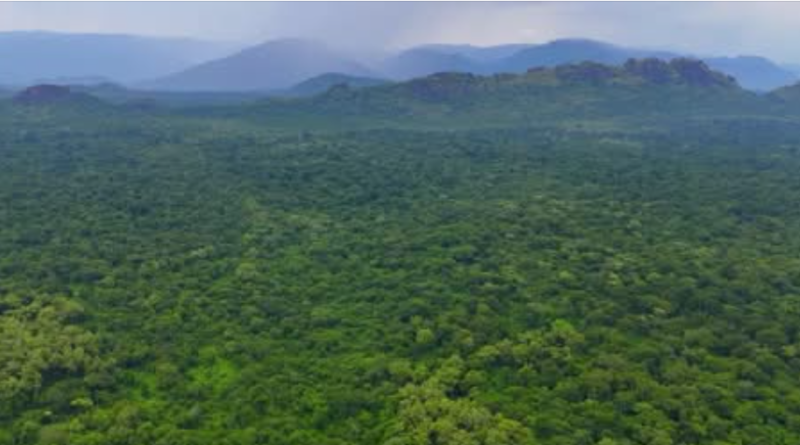
It should be noted that the Anywaa Biosphere is not something that was recently “established” on the land of the Anywaa people. For many centuries, the Anywaa have lived on this land, which extends from Gambela to the border with Shilluk in South Sudan and includes all tributaries of the Nile in this area. The Anywaa Biosphere is not simply a project or a political initiative; for the Anywaa people, it is a natural and historical inheritance that predates modern administrative boundaries and the formation of contemporary states such as Ethiopia and Sudan.
For this reason, describing the biosphere as a mechanism for land appropriation misrepresents its historical context. It also risks creating unnecessary tension among communities that have lived side-by-side under complex regional dynamics. The Anywaa Biosphere – covering more than 1,838,624 hectares – existed long before modern political institutions, long before present-day administrative zones, and long before concepts of statehood took shape in this region.
Recently, in addition to this article, arguments have been made suggesting that the biosphere encroaches on territories “traditionally inhabited” by certain communities and that its surveying process requires consultation due to alleged economic or political impacts. Such claims risk turning an ecological and cultural reality into a political controversy. The biosphere’s existence is not dependent on administrative authorization, and no community is being displaced or negatively affected by its recognition.
It is important to acknowledge the broader regional history. During the previous political period – including the Derg era – Gambela’s governance was shaped by international dynamics, including the civil war in Sudan, the Cold War and alliances between regional actors. These geopolitical arrangements influenced population movements, administrative decisions, and local leadership. Understanding these historical factors is essential when assessing present-day issues.
Political decisions over the past decades – especially the creation of certain administrative units – have contributed to recurring tensions and episodes of insecurity in both Gambela and neighboring South Sudan. Some leaders and groups benefitted from political alliances that, intentionally or not, altered demographic balances and created long-lasting grievances. The movement of political actors across borders, including prominent figures during periods of conflict in South Sudan, further complicated local dynamics.
The current concerns in Anywaa areas should therefore not be attributed to the biosphere itself. Rather, they arise from long-standing political, administrative, and strategic decisions made at higher levels of government. These decisions were often informed by regional geopolitical logic, including the principle commonly described in East African politics as “the enemy of my enemy is my friend.”
Regarding the notion of compensation: it is important to approach this issue with fairness and clarity. Many Anywaa communities have themselves experienced historical displacement from areas such as Nasir, Akobo, Boru Biye, Wonthwa, and others, without receiving compensation. Any discussion of compensation today must consider this broader context and avoid creating new grievances.
Claims about demographic majority or minority status should also be handled carefully. Population figures in Gambella have long been influenced by refugee flows from the neighboring country, South Sudan, due to conflict. Distinguishing between long-established indigenous groups and temporary refugee populations is necessary for accurate analysis and respectful dialogue.
The recommendation that the federal government intervene must also be examined carefully. In the past, federal decisions—particularly regarding refugee settlement—were made without meaningful consultation with indigenous communities. This contributed to tensions that continue to affect the region today.
The current situation in Gambela is fragile. People are suffering, lives have been lost, and displacement continues. Publications or narratives that omit critical context can unintentionally worsen tensions and misunderstandings, attributing the bloodshed.
At this moment, what is needed most is a calm, responsible, and balanced approach that respects all communities of Gambela. The indigenous peoples of the region have the right to feel secure on their ancestral land and to safeguard their cultural and natural heritage. Long-term peace will only be possible if discussions are grounded in historical accuracy, mutual respect, and a sincere commitment to coexistence.
By Abella Othow