
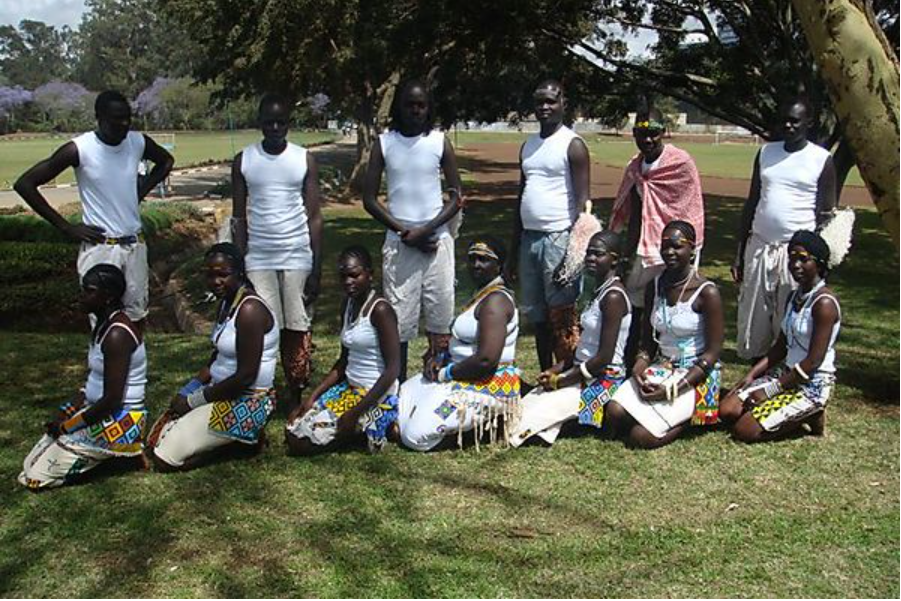
Early History of the Anywaa People
The Anywaa (also spelled Anuak) are among the oldest Indigenous Nilotic peoples of the Western Ethiopian lowlands and the eastern frontier of South Sudan. Their deep historical presence is woven into the landscapes shaped by the Baro, Gilo, Akobo, Alwro, and Sobat Rivers—waterways that influenced their settlement patterns, political organization, and interethnic relations. Unlike later pastoralist migrants who entered the region in subsequent centuries, the Anywaa cultivated a distinctly riverine and agricultural society rooted in fishing, floodplain farming, and village autonomy. Their early history, preserved through oral traditions and confirmed by colonial-era ethnographers, affirms a longstanding connection to the land that today forms the core of the Gambela region.
Origins and Oral Traditions
Anywaa collective identity begins in powerful oral traditions centered on the cultural hero Uchoda. As recorded by C.R.K. Bacon (1922), Uchoda is said to have emerged mysteriously from the river, where he resolved a dispute among children over a caught fish. Captured by villagers who wished to learn from him, he later married into the ruling lineage and introduced sacred heirlooms—most notably the Uchok and Gurmatto bead necklaces—that continue to symbolize political legitimacy among the Anywaa.
These stories situate the origins of authority within the spiritual and ecological world of the river, reinforcing the cultural idea that leadership is divinely connected to water. They also reference an earlier ancestor, Chuwai, whose descendants founded the first clans and established the social frameworks that would anchor Anywaa society for generations. Through these mythic narratives, the Anywaa assert indigeneity, continuity, and rightful ownership of their ancestral lands.
Early Settlement and Territorial Extent
Historical and ethnographic sources confirm that the Anywaa once occupied a much broader territory than they do today. Bacon (1922) recorded that their settlements extended along the Sobat River from the Pibor confluence to Tawbai and into regions such as Adura and Mokwai before later displacement by migrating Nuer populations.
This wide territorial presence corresponded with ecologically favorable floodplains ideal for their mixed livelihood system of millet cultivation, fishing, and riverbank habitation. Early 20th-century observers, including Evans-Pritchard (1947), estimated the Anywaa population at roughly 30,000–50,000, living in dispersed riverine villages typically ranging from 200 to 500 inhabitants. These villages formed the basic political and social units of Anywaa society, a structure that endures to the present day.
Village Autonomy and Political Organization
Anywaa political life developed around a decentralized system of independent villages, each led by a kwaro (headman). Leadership was traditionally drawn from the lineage believed to be the “owners of the land”—the kwai ngam—who maintained ritual and historical ties to the village’s founding. Lienhardt’s detailed ethnography (1957) emphasizes that the headman embodied the unity and identity of the community, presiding over conflict resolution, ceremonial life, agricultural coordination, and the guardianship of sacred objects.
Crucially, leadership was conditional. A headman’s authority depended on his generosity, fairness, and ability to sustain social harmony. If he failed, the community could depose him through agem, a form of collective revolt or peaceful political transformation. Wall (1976) interprets this mechanism as a form of democratic accountability that balanced social cohesion with checks on authority.
This decentralized structure distinguished the Anywaa from centralized Nilotic polities such as the Shilluk kingdom while reinforcing village autonomy as the core of political identity.
Economic Foundations and Ecological Adaptation
Throughout early historical accounts, the Anywaa emerge primarily as agriculturalists cultivating sorghum, millet, and maize in fertile floodplains that were replenished each rainy season. Fishing and seasonal hunting complemented their livelihoods, but cattle herding—a hallmark of neighboring Nuer and Dinka cultures—never formed the basis of their economy.
Wall (1976) notes that while the Anywaa retain a pastoral vocabulary suggestive of distant pastoral ancestry, they remain firmly rooted in sedentary agriculture and ecological self-sufficiency. This mode of life encouraged stable village communities that valued autonomy and minimized economic dependency on external groups.
Major H.H. Austin’s 1902 expedition along the Openo (Baro), Gilo, and Alwro Rivers described Anywaa settlements as well-organized, agriculturally productive, and socially complex, with longstanding systems of fishing and cultivation that predated colonial intrusion or later population movements.
Relations With Neighboring Peoples
The Anywaa share linguistic and cultural ties with the Western Nilotic Luo-speaking Shilluk and Jur peoples, yet their relations with neighboring groups were shaped by shifting population movements. The most transformative of these was the migration and expansion of Nuer groups during the 18th and 19th centuries.
Bacon (1922) documents how Jikany and Gaajak Nuer migrations displaced the Anywaa from many of their former territories along the Sobat and lower Baro Rivers, contributing to the contraction of Anywaa lands to the central Baro and Gilo regions. Despite these pressures, the Anywaa retained strong control over key river corridors and maintained their political and cultural distinctiveness.
Relations with pastoralist neighbors were often tense—arising from differing economic systems, competition over land, and the vulnerability of agricultural settlements to cattle raids—but also involved periods of coexistence, intermarriage, and trade.
Conclusion
The early history of the Anywaa reveals a deeply rooted Indigenous community shaped by riverine ecology, rich oral traditions, and a distinctive form of decentralized governance. Their long-standing presence in the Gambela region predates the arrival of many neighboring groups and is reflected in enduring cultural practices, sacred narratives, and village autonomy.
Understanding this early history is essential not only for reconstructing the precolonial dynamics of the region but also for recognizing the Anywaa as an Indigenous people whose historical claims, political structures, and cultural identities have persisted through centuries of migration, displacement, and state formation.
References
Austin, H. H. (1902). Among Swamps and Giants in Equatorial Africa. London: C. Arthur Pearson.
Bacon, C. R. K. (1922). The Anuak. Sudan Notes and Records, 5(3), 113–129.
Evans-Pritchard, E. E. (1947). Further observations on the political system of the Anuak. Sudan Notes and Records.
Lienhardt, G. (1957). Anuak village headmen. Africa: Journal of the International African Institute, 27(4), 341–355.
Wall, L. L. (1976). Anuak politics, ecology, and the origins of Shilluk kingship. Ethnology, 15(2), 151–162.