
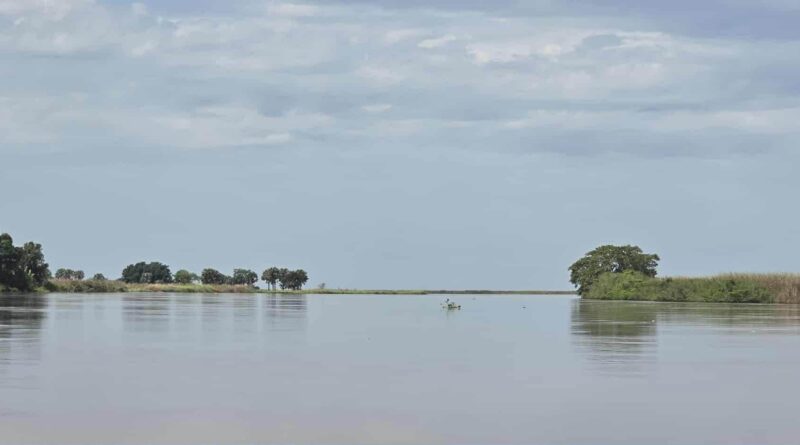
The Openo River and Its Historical Importance
The Openo—known today as the Baro River—is the central lifeline of the Gambela region and one of the most historically significant waterways in the western Ethiopian lowlands and adjacent Nilotic borderlands. For centuries, it has served as the geographic heart of Anywaa (Anuak) civilization, a corridor for migration and trade, a boundary of political influence, and later, a focus of colonial expansion. Ecologically rich and culturally revered, the Openo provides a framework through which the past and present of the region can be understood.
A River at the Core of Indigenous Civilization
For the Anywaa, the Openo has always been more than a river; it is the foundation of social, economic, and cultural life. Early ethnographers described how the most established and prosperous Anywaa villages clustered along its banks. The fertile soils, seasonal floodplains, and abundant fish shaped a river-centered agricultural economy that distinguished Anywaa society from the pastoralist cultures surrounding it.
Evans-Pritchard (1947) observed that villages near the Openo were more interconnected and cooperative than those in the swampy lowlands to the west, owing to denser settlement patterns and ecological stability. Wall (1976) further notes that the Openo’s reliability enabled the development of sedentary agriculture, village autonomy, and local trade networks—systems that stood in contrast to the mobile cattle economies of Nuer and Murle communities. In this way, the Openo provided the ecological stability necessary for the growth of a distinct riverine civilization.
Historical Settlement and River-Based Expansion
The historical significance of the Openo is deeply embedded in Anywaa oral traditions. Accounts recorded by Bacon (1922) describe how founding clans established their earliest settlements along major rivers, including the Baro, and rooted their political legitimacy in sacred objects and myths tied to the river environment. These narratives emphasize that the river was not only a lifeline but a sacred space in which ancestral authority, cultural identity, and social order took shape.
Even as regional pressures intensified—particularly with the expansion of Nuer groups in the 18th and 19th centuries—the Openo basin remained the most stable and resilient center of Anywaa life. While the Anywaa lost portions of their former territories along the Sobat and Pibor rivers, Bacon notes that the Baro remained an area of strong and enduring Anywaa control. Its dense settlement, agricultural productivity, and strategic geography helped preserve it as the heartland of Anywaa civilization.
Exploration, Navigation, and Colonial Significance
By the late 19th century, the Openo River emerged as a site of international interest. European explorers and colonial powers viewed it as a key artery linking the Ethiopian highlands to the Nile basin. During the 1899–1900 survey expeditions, Major H.H. Austin documented the Baro as a navigable route supporting Anywaa settlements, facilitating trade, and connecting remote communities long before the arrival of foreign administrations.
Austin’s accounts also highlight the river’s value for colonial logistics. During high-water seasons, steamers and barges could travel significant distances, enabling the transport of goods, military personnel, and equipment. This accessibility ultimately contributed to the establishment of the Gambela trading station—a major economic hub that tied Ethiopia to the Sudanese Nile corridor and reshaped regional political dynamics.
Cultural and Political Interactions Along the River
The Openo has long served as a dynamic frontier where multiple societies met, interacted, and sometimes clashed. Along its banks, established Anywaa agricultural communities coexisted with:
- Highland Ethiopian merchants seeking commercial access,
- Nuer migrants expanding eastward into new grazing territories,
- Colonial agents interested in navigation rights, trade, and administration.
Lienhardt (1957) and Evans-Pritchard (1947) describe the river as both a zone of cooperation—through trade, inter-village alliances, and shared rituals—and a site of conflict during periods of migration and colonial intervention. Despite these external pressures, the Openo remained the backbone of Anywaa social life and remained a geographical marker distinguishing their sedentary riverine villages from pastoralist settlements farther west.
Symbolic and Cultural Significance
Beyond its ecological and political functions, the Openo holds enduring symbolic importance. Many foundational narratives—such as Uchoda’s emergence from the river or the sacred heirlooms presented to ancestral leaders—reflect the river’s spiritual centrality. These traditions, recorded by Bacon and others, highlight how authority, identity, and continuity within Anywaa society are tied to the river’s presence.
To the Anywaa, the Openo is not merely a physical resource; it is a cultural homeland. Its waters anchor their rituals, define their territorial legitimacy, and frame their collective memory.
Conclusion
The Openo (Baro) River stands as one of the most vital historical and cultural features of the Gambela region. Its fertile banks supported some of the earliest Indigenous settlements, shaped patterns of agriculture and political organization, and connected diverse peoples across ecological and cultural boundaries. As colonial powers entered the region, the Openo became a route for exploration, a channel of international trade, and eventually a site of administrative expansion.
Across all these transformations, the river remained central to Indigenous identity and historical continuity. To understand the Openo is to understand the origins, resilience, and evolution of the Anywaa people—and by extension, the historical foundations of Gambela itself.
References
Austin, H. H. (1902). Among Swamps and Giants in Equatorial Africa. London: C. Arthur Pearson.
Bacon, C. R. K. (1922). The Anuak. Sudan Notes and Records, 5(3), 113–129.
Evans-Pritchard, E. E. (1947). Further observations on the political system of the Anuak. Sudan Notes and Records.
Lienhardt, G. (1957). Anuak village headmen. Africa, 27(4), 341–355.
Wall, L. L. (1976). Anuak politics, ecology, and the origins of Shilluk kingship. Ethnology, 15(2), 151–162.