
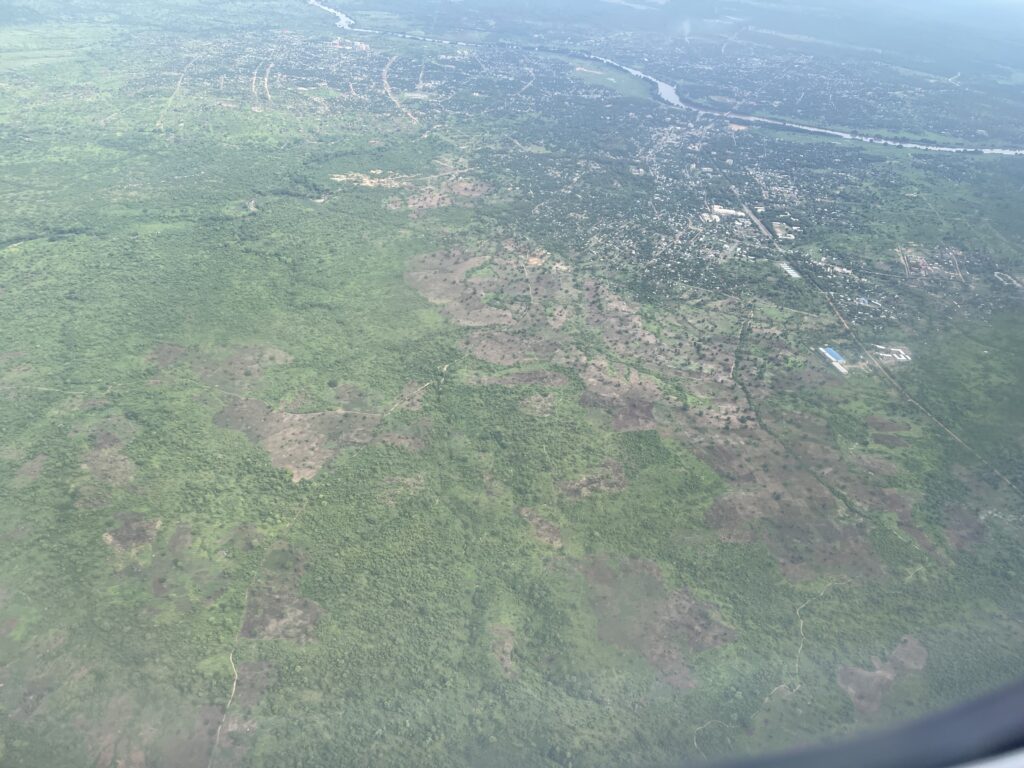
Historical Conflicts and Migration Patterns in the Gambela Region
The Gambela region’s history is defined by dynamic patterns of migration, interethnic conflict, and shifting political landscapes. Among these forces, none has been more transformative than the long and often turbulent relationship between the Indigenous Anywaa (Anuak) people and the Nuer, whose movements from the 18th century onward reshaped the demographic, political, and territorial reality of the region. These transformations—rooted in early pastoral expansion, later intensified by war-driven refugee flows, and compounded by colonial and state policies—form the foundation of modern Gambela’s complex social fabric.
Early Anywaa Territory and External Pressures
Historical accounts reveal that the Anywaa once inhabited a vast riverine territory stretching across the Sobat, Openo (Baro), Pibor, Gilo, Adura, and Mokwai river systems. Bacon (1922) documents that they occupied both banks of the Sobat River, “from the Pibor mouth down to Tawbai,” as well as deeper southeastern territories before major upheavals altered this distribution. These settlements were concentrated along fertile waterways, where autonomous villages practiced agriculture, fishing, and seasonal hunting—forming a stable, river-dependent society that contrasted sharply with the mobile pastoralism of neighboring groups.
This extensive early domain positioned the Anywaa as one of the region’s dominant Indigenous communities. However, it would soon become the focal point of profound demographic transition.
The Nuer Expansion Into Anywaa Lands (18th–19th Centuries)
The most consequential disruption to Anywaa territorial continuity began in the 18th century with the large-scale eastward and southward migrations of the Nuer. As Bacon (1922) describes, Nuer groups expanded outward from the Bahr el Ghazal and Shambe regions, displacing the Shilluk near Tonga, overwhelming segments of the Dinka, and ultimately pushing into the Sobat basin and sections of the Openo (Baro) River. This expansion resulted in the loss of significant Anywaa territories.
The motivations behind the Nuer expansion included:
- Ecological pressure: the search for new grazing lands and reliable water sources for cattle
- Internal political conflict: fragmentation within Nuer clans encouraged outward migration
- Military capacity: large numbers of armed warriors and early access to firearms strengthened their advantage
By the time explorers such as Major H.H. Austin arrived in the region around 1900, many areas previously dominated by Anywaa settlements had come under Nuer control. Austin’s journals frequently describe extensive Nuer villages near Nasser and along the Sobat, indicating the extent to which the demographic landscape had changed.
Colonial Borders and the Freezing of Migration Patterns
The imposition of colonial borders between Anglo-Egyptian Sudan and Ethiopia in the early 20th century further entrenched these shifts. Designed largely by distant administrators unfamiliar with local dynamics, the border bisected ancestral Anywaa lands and formalized Nuer territorial gains.
Evans-Pritchard (1947) notes that colonial officials attempted to regulate leadership and movement in border areas, but the limited administrative presence in the lowlands meant that Nuer pastoral expansion continued largely unchecked.
This border produced several long-term consequences:
- It divided Anywaa communities, weakening their political cohesion and cultural continuity.
- It allowed further Nuer movement into Ethiopia, especially during periods of weak enforcement.
- It created legal ambiguity, which later facilitated refugee settlement, naturalization, and political reorganization.
Thus, a line drawn by colonial powers inadvertently set the stage for future demographic and political tensions.
20th-Century Refugee Movements Into Gambela
The patterns of mobility intensified dramatically in the mid- and late 20th century. Two prolonged Sudanese civil wars (1955–1972; 1983–2005) forced massive waves of Nuer civilians into Ethiopia, with Gambela becoming the primary sanctuary.
While your uploaded historical files focus mainly on earlier periods, they clearly document the Nuer’s long-standing patterns of movement and territorial expansion—context that helps explain why later refugee flows consisted predominantly of Nuer communities.
The refugee influx had several major impacts on Gambela:
1. Demographic Transformation
Tens of thousands of refugees—mostly Nuer—settled in or near Anywaa areas. Over time, naturalization processes, intermarriage, and continued migration created a demographic environment in which Nuer populations outnumbered Indigenous communities in many administrative districts.
2. Pressure on Land and Natural Resources
Refugee camps, often established along fertile or river-adjacent land, strained Anywaa access to:
- farmland
- fishing areas
- riverbanks and water channels
- forest resources
This contributed to recurring disputes and heightened competition over subsistence resources.
3. Citizenship and Political Incorporation
Ethiopia historically lacked strong administrative mechanisms to regulate refugee naturalization or local political participation. As a result, many Nuer refugees:
- acquired Ethiopian identity documents,
- entered local governmental structures,
- and gained political influence disproportionate to their historical presence.
This mirrored earlier colonial patterns in which administrative gaps allowed continued mobility and settlement without oversight.
4. Renewal of Interethnic Conflict
The demographic shifts reignited longstanding tensions. Wall (1976) emphasizes that Anywaa social and political systems centered on small, cohesive, autonomous villages. The sudden arrival of large groups with pastoral traditions and different political structures disrupted this equilibrium.
Conflicts emerging from this demographic change often revolved around:
- questions of land ownership and territory,
- administrative appointments and political power,
- competition for resources,
- differing cultural practices,
- and the Ethiopian state’s tendency to align politically with Nuer groups.
Conflict Over Identity, Land, and Power
Historical memories of displacement combined with new political realities created a complex and often volatile regional landscape. For the Anywaa, the territorial losses of the 18th–19th centuries were compounded by 20th-century refugee influxes and political marginalization. For the Nuer, Gambela became not only a place of refuge but a landscape for settlement and political opportunity.
These overlapping historical layers continue to shape identity, governance, and interethnic relations in the region today.
Conclusion
The history of Gambela is marked by successive waves of migration and conflict that reshaped its peoples and their relationships to one another. The early Nuer expansion displaced the Anywaa from large portions of their ancestral homeland; colonial boundary-making institutionalized these shifts; and the late 20th-century refugee influx intensified demographic and political changes. Together, these forces transformed a once predominantly Anywaa riverine landscape into a multiethnic frontier marked by competition, adaptation, and resilience.
Understanding these layered historical movements is essential to grasping contemporary issues of identity, land, governance, and ethnic politics in Gambela. They highlight both the vulnerability and endurance of Indigenous communities, while revealing how migration—whether pastoral, political, or war-driven—continues to shape the social and political fabric of the region.
References
Austin, H. H. (1902). Among Swamps and Giants in Equatorial Africa. London: C. Arthur Pearson.
Bacon, C. R. K. (1922). The Anuak. Sudan Notes and Records, 5(3), 113–129.
Evans-Pritchard, E. E. (1947). Further observations on the political system of the Anuak. Sudan Notes and Records.
Lienhardt, G. (1957). Anuak village headmen. Africa, 27(4), 341–355.
Wall, L. L. (1976). Anuak politics, ecology, and the origins of Shilluk kingship. Ethnology, 15(2), 151–162.*