
The Root Causes of Land Conflict in Gambela: Refugee Settlement, Governance Failures, and Indigenous Land Rights
The Gambela Region has become one of the most politically fragile territories in Ethiopia, shaped by unresolved historical grievances, refugee settlement policies, weak border governance, and the erosion of Indigenous territorial rights. While conflict in Gambela is often framed as interethnic tension between Indigenous Anywaa and incoming Nuer communities, the deeper causes are structural and political. Decades of government inaction, demographic pressure, and administrative decisions made without meaningful consultation with Indigenous populations have fundamentally altered the cultural and political landscape of the region.
One of the central forces driving instability in Gambela is the long-standing failure to regulate the Ethiopia–South Sudan border. Scholars such as Johnson (2003) and Young (1999) document how the porous boundary has allowed large-scale cross-border movement of armed factions, including SPLA-IO elements, especially during the Sudanese civil wars. These movements enabled unauthorized settlement in sensitive areas such as the Nyimeri and Omeninga areas in Jor woreda, creating zones of insecurity where Indigenous communities are compelled to coexist with armed groups whose legal status is unclear. Weak border enforcement has therefore reinforced a cycle of vulnerability for Indigenous peoples.
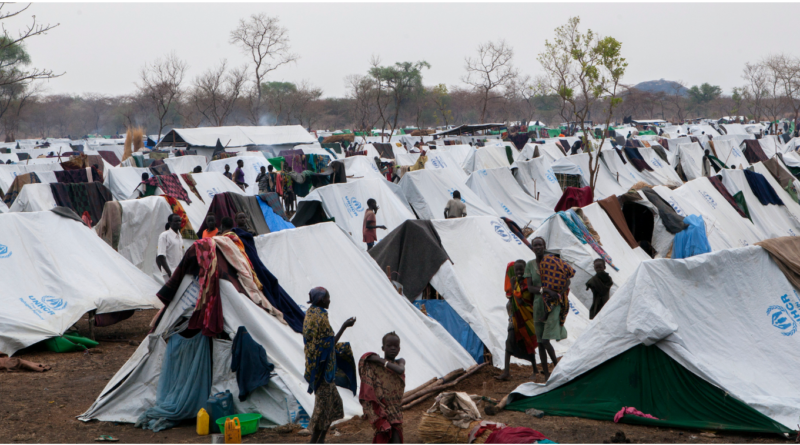
Ethiopia’s refugee policy further intensified these dynamics. Beginning in the 1980s, refugee camps, including Itang, Pinyudo, and later Bonga, were established in Gambela as emergency responses to the Sudanese conflict. However, as Hutchinson (1996) and Dereje (2009) note, the camps gradually became permanent settlements despite lacking formal consultation with Indigenous landholders. Land historically stewarded by Anywaa communities became absorbed into humanitarian jurisdictions, shifting demographic balance and undermining Indigenous land rights. Over time, the refugee presence transformed from temporary humanitarian aid to a long-term political and demographic restructuring of the region.
Government responses have often minimized the complexity of these problems. Local violence and displacement are frequently characterized as minor disputes or “farmer conflicts,” a framing that obscures deeper structural causes (Dereje, 2009). This reductionist interpretation allows authorities to avoid addressing issues such as land loss, political marginalization, unregulated settlement, and competition over scarce natural resources. The absence of sustained conflict-resolution mechanisms has permitted grievances to intensify between communities, reinforcing cycles of hostility.
Land occupation remains one of the most contentious issues. Indigenous Anywaa communities report continual encroachment on their ancestral territories, sometimes with informal approval or passive tolerance from administrative structures. Reports from Young (1999) and Kurimoto (1992) describe how areas historically inhabited by Indigenous populations were gradually taken over through settlement expansion, refugee absorption, and administrative reclassification. When communities protest, they are frequently blamed or disciplined by local authorities, creating an impression that Indigenous resistance is illegitimate. Such responses foster impunity for land grabbing while eroding trust between the state and Indigenous populations.
Governance challenges compound the crisis. Many new arrivals to Gambela come from South Sudan, where years of war have weakened state institutions, disrupted traditional authority systems, and eroded adherence to centralized legal structures (Johnson, 2003). When war-affected populations relocate to Ethiopia without sufficient integration or orientation mechanisms, they bring with them social norms and political loyalties shaped by conflict rather than by Ethiopian law. Factional tensions and sub-clan rivalries, well documented by Evans-Pritchard (1940) and Hutchinson (1996), often re-emerge within refugee-hosting areas, contributing to new forms of instability within Gambela.
Administrative restructuring under Ethiopia’s ethnic federalism further altered the political landscape. In the 1990s and 2000s, new woredas and zones were created along ethnic lines, often based on the population density of Nuer refugees rather than on historical Indigenous territories (Dereje, 2009). Refugee camps were upgraded into kebeles and later woredas, granting political authority to refugee populations who had no ancestral claim to the land. This policy marginalized Indigenous Anywaa groups, fragmented traditional land zones, and shifted the balance of political power in favor of newly arrived Nuer populations. For many Indigenous communities, this restructuring constituted a second displacement, not only from land but from political agency.
Political competition has become an inseparable part of the conflict. As Markakis (1994) notes, political dominance in the Horn of Africa is often tied to demographic strength. In Gambela, the demographic advantage gained through refugee influx has translated into disproportionate political influence for Nuer communities. Indigenous groups perceive this as an existential threat, particularly when leadership roles, budget allocations, and land administration decisions favor migrant communities over original inhabitants. These dynamics intensify cultural misunderstandings and deepen fears that Indigenous identity may be overwhelmed by external populations.
A consistent problem underlying all these issues is the state’s reluctance to intervene decisively. Authorities have often remained silent in the face of unlawful settlement, border infiltration, or violent clashes. This hesitancy has created a governance vacuum in which unauthorized expansion is normalized, Indigenous grievances go unaddressed, and cycles of violence recur. Young (1999) observes that Gambela has long suffered from inconsistent governance, with federal and regional authorities oscillating between overreach and neglect.
Geopolitical narratives also shape the conflict. Discussions within segments of the South Sudanese political sphere about a future “Naath nation” have fueled fears that Gambela is being targeted as part of a larger cultural or territorial expansion. Whether symbolic or realistic, such narratives heighten Indigenous anxieties about long-term displacement and cultural assimilation.
Given these complex dynamics, sustainable peace in Gambela requires a comprehensive policy response that addresses the structural roots of conflict rather than its symptoms. A key component of such a solution must be the relocation of refugee populations from Gambela to other parts of Ethiopia. No single region should bear the overwhelming humanitarian burden that Gambela has carried for decades. Relocation would help restore demographic balance, reduce land pressure, and allow Indigenous communities to rebuild security and confidence in state institutions. Ethiopia’s refugee responsibility must be shared equitably across multiple regions, particularly those with greater administrative capacity and lower land conflict risk.
Beyond relocation, effective policy must include stronger border management, transparent land administration, protection of Indigenous land rights under the Ethiopian Constitution, and meaningful consultation with host communities. Political representation must be recalibrated to prevent displacement-based majorities from monopolizing regional governance. Conflict prevention mechanisms, cultural orientation programs for new arrivals, and community-driven reconciliation initiatives are essential for rebuilding trust.
The future stability of Gambela depends on recognizing and addressing the historical grievances of its Indigenous peoples. Refugee protection cannot come at the expense of Indigenous sovereignty, security, and cultural survival. Only through a balanced policy framework that protects both humanitarian obligations and Indigenous rights can Ethiopia secure a peaceful and just future for the Gambela Region.
References
Beswick, S. (2004). Sudan’s Blood Memory: The Legacy of War, Ethnicity, and Slavery in South Sudan. Boydell & Brewer.
Dereje, F. (2009). The Nuer–Anywaa conflict in Gambella, Ethiopia. Eastern Africa Social Science Research Review, 25(1), 61–86.
Evans-Pritchard, E. E. (1940). The Nuer: A Description of the Modes of Livelihood and Political Institutions of a Nilotic People. Clarendon Press.
Hutchinson, S. E. (1996). Nuer Dilemmas: Coping with Money, War, and the State. University of California Press.
Johnson, D. H. (2003). The Root Causes of Sudan’s Civil Wars. James Currey.
Kurimoto, E. (1992). People of the river: Ecology and history in the Nuer–Anywaa borderlands. In Ethiopia in Broader Perspective (Vol. 2).
Markakis, J. (1994). Ethnicity and Conflict in the Horn of Africa. James Currey.
Young, J. (1999). Along Ethiopia’s Western Frontier: Gambella and Benishangul in Transition. Addis Ababa University Press.