
Legal and Human-Rights Concerns Regarding Refugee Status, Identification, and Accountability in Gambela
Refugee-hosting regions face complex legal, demographic, and security challenges that require clear governance and consistent application of the rule of law. In Ethiopia, these challenges are especially pronounced in Gambela, a region hosting a refugee population that, by multiple assessments, equals or exceeds the size of the indigenous host communities. While Ethiopia has demonstrated long-standing commitment to refugee protection under domestic and international legal frameworks, gaps in implementation have produced legal ambiguity that threatens accountability, social cohesion, and human-rights protections.
Under Ethiopian law and international refugee protection regimes, refugee status is a specific legal designation that confers defined rights, limitations, and responsibilities. These frameworks, anchored in refugee registration, verification, and institutional coordination, are designed to protect displaced persons while preserving public order and legal accountability (UNHCR, 2019). Legal certainty is a foundational principle of the rule of law. When legal status is unclear or inconsistently applied, institutions struggle to enforce laws fairly, and communities lose trust in governance structures.
In Gambela, a persistent gap exists between legal frameworks and practical implementation. Once individuals leave officially designated refugee camps, distinctions between refugees, former refugees, and Ethiopian citizens often become blurred. This ambiguity affects access to education, political participation, law enforcement, and judicial accountability. It also creates heightened tension in a region where refugees, primarily from South Sudan, constitute a demographic majority in several localities (UNHCR, 2023). From a human-rights perspective, demographic imbalance combined with legal uncertainty places both host communities and refugees at increased risk of misunderstanding, perceived injustice, and conflict.
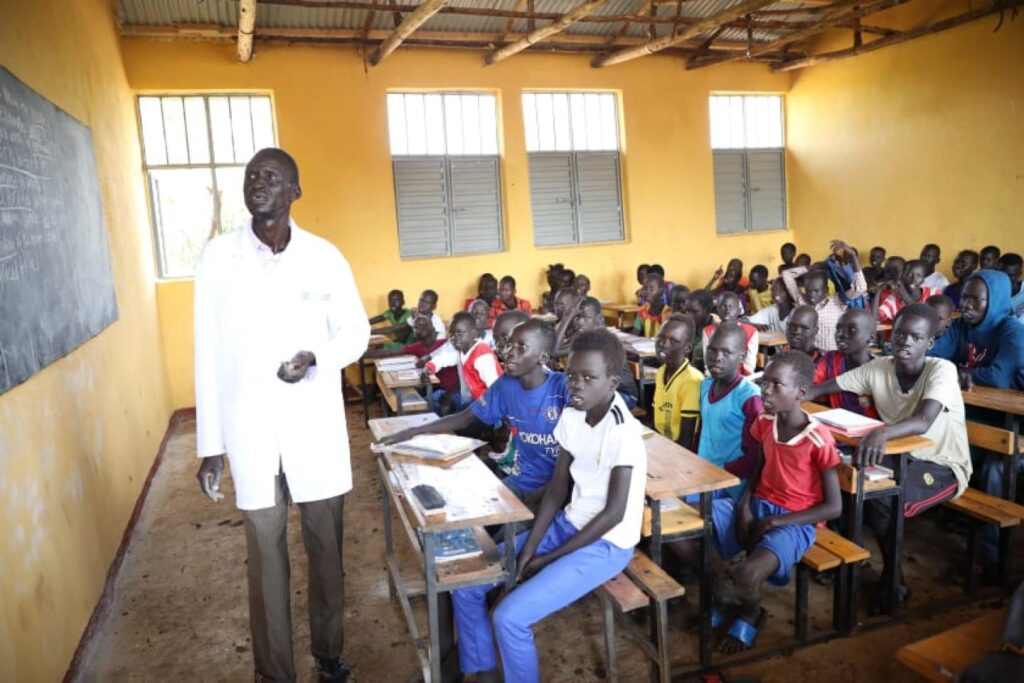
Higher education institutions provide a critical lens through which these challenges become visible. Refugee camps in Gambela have produced a significant number of secondary-school graduates who now attend public universities across Ethiopia. This reflects the central role of education as a protected human right under international law (United Nations, 1948). However, the absence of consistent mechanisms to identify refugee legal status within universities raises serious concerns regarding accountability, disciplinary procedures, and equal application of institutional regulations. When incidents of violence or harassment occur, unclear legal status can complicate investigations and undermine confidence in the fairness of outcomes.
Human-rights law recognizes that rights must coexist with responsibilities. Refugees are entitled to protection from discrimination and access to essential services, but they are also subject to the laws of the host state. Equal accountability under the law is not a limitation on rights; it is a necessary condition for their protection. Failure to apply legal standards consistently, whether due to administrative gaps, political sensitivity, or security concerns, constitutes a rule-of-law deficit that harms all affected populations.
An additional and increasingly urgent concern in Gambela relates to security and militarization. Numerous reports have documented the presence of small arms in and around refugee-hosting areas, often linked to cross-border movement from South Sudan (Small Arms Survey, 2021). International refugee law does not permit the presence of armed civilians within refugee populations. On the contrary, civilian and humanitarian character of asylum is a core legal principle requiring that refugees be disarmed and separated from armed elements (UNHCR, 2006). Effective and lawful disarmament of refugees, conducted with due process and oversight, is therefore not a violation of rights but a protective measure for both refugees and host communities.
Furthermore, border management remains a critical component of refugee protection and regional stability. Refugees crossing international borders while armed pose serious risks to civilian safety and undermine the humanitarian nature of asylum. Strengthened border screening, lawful disarmament at entry points, and cooperation with international agencies are essential to prevent the spillover of armed conflict into host regions (African Union, 2009).
Given the demographic pressure in Gambela, relocation of some refugees to other parts of Ethiopia should also be considered as a protection and burden-sharing measure, consistent with international standards. International practice recognizes that over-concentration of refugees in fragile regions can exacerbate insecurity and strain local resources, ultimately harming both host communities and refugees themselves (UNHCR, 2014). Relocation, when conducted voluntarily, transparently, and with adequate services, can enhance safety, dignity, and social cohesion.
From a human-rights standpoint, the core issue is not the presence of refugees, but the absence of legal clarity, balanced distribution, and effective security governance. Without these elements, legal protections lose credibility and social divisions deepen. Sustainable peace in Gambela will not be achieved through denial or politicization of identity, but through the consistent application of law, respect for human dignity, and protection of the rights of all residents.
To meet its constitutional obligations and international commitments, Ethiopia must ensure clear refugee identification procedures, equal protection and accountability under the law, non-discriminatory access to education, lawful disarmament of armed civilians, effective border protection, and fair redistribution of refugee populations where necessary. Only through legal clarity, institutional transparency, and security grounded in human-rights principles can Gambela move toward lasting coexistence and stability.
References
African Union. (2009). African Union Convention for the Protection and Assistance of Internally Displaced Persons in Africa (Kampala Convention). Addis Ababa: AU.
Small Arms Survey. (2021). Armed actors and civilian protection in the Horn of Africa. Geneva: Graduate Institute of International and Development Studies.
United Nations. (1948). Universal Declaration of Human Rights. Paris: United Nations General Assembly.
UNHCR. (2006). Operational guidelines on maintaining the civilian and humanitarian character of asylum. Geneva: United Nations High Commissioner for Refugees.
UNHCR. (2014). Global strategy for settlement and protection of refugees. Geneva: United Nations High Commissioner for Refugees.
UNHCR. (2019). Ethiopia refugee proclamation No. 1110/2019: Implementation guidance. Geneva: United Nations High Commissioner for Refugees.
UNHCR. (2023). Ethiopia country refugee response plan. Geneva: United Nations High Commissioner for Refugees.